How we judge a mask
- Irradiance (mW/cm²) — the power actually delivered to skin; ask for the treatment-plane figure.
- Wavelengths — 415nm blue, ~580nm amber, 630–637nm red, 830nm near-infrared; accuracy beats colour count.
- Coverage & fit — full face, ideally with the neck, at an even distance.
- Type of evidence — instrument-measured studies and clinic imaging beat perception surveys.
- Certification — for the UK: UKCA/CE, a recognised photobiological-safety class, biocompatibility.
For the science behind these criteria, see how LED light therapy works and the Clinical Evidence library. Not sure where to start? Take the 60-second skin quiz.
Note: almost every brand declines to publish irradiance. We mark it Not disclosed rather than guess.
The reviews
Chouchou Tokyo Radiance Kit
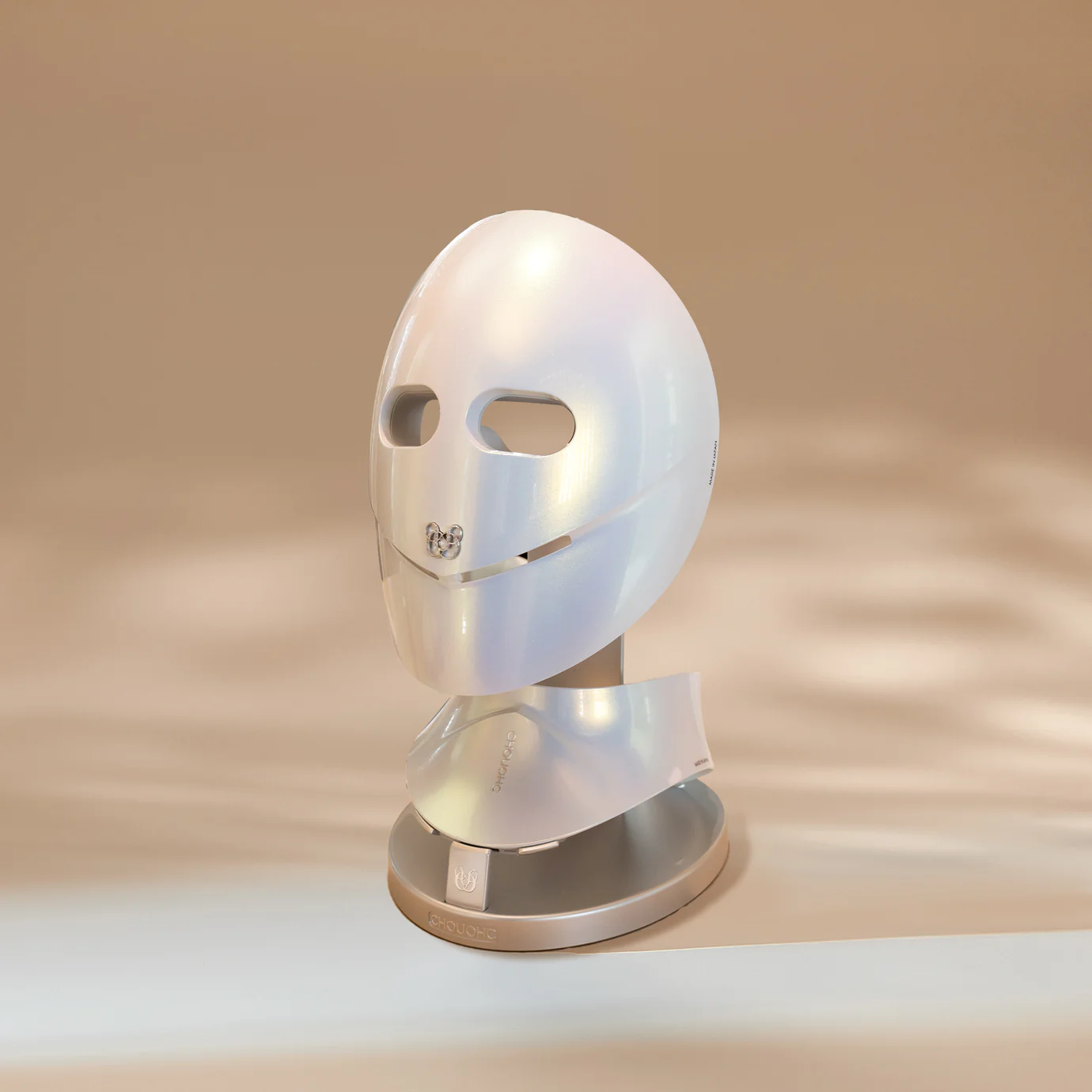
Made in Japan, the Radiance Kit is unusual in treating the full face and the neck in a single session. It carries 1,528 individually-driven LEDs (1,026 on the face mask, 502 on the neck device) across four wavelengths — 420nm blue, 583nm amber, 637nm red and 830nm near-infrared — so each zone can receive the band it needs. The fit comes from 66-point facial mapping, and the kit is UKCA and CE certified and classified Exempt Group (RG0) for photobiological safety.
It is also one of the few in this list whose results have been measured both by an instrumented laboratory study and tracked in a dermatologist-led clinic, rather than by consumer-perception surveys alone.
CurrentBody Skin Series 2
A popular, well-priced flexible-silicone mask with a three-wavelength system (633nm red, 830nm near-infrared and 1072nm). Good full-face coverage and an easy routine; published support leans more on consumer-perception than instrumented measurement.
Omnilux Contour Face
A long-established name with 20+ years of clinical heritage behind its dual-wavelength (633nm/830nm) approach. Visually plain, but a dependable, well-evidenced choice for red/near-infrared rejuvenation.
Dr Dennis Gross DRx SpectraLite FaceWare Pro
A rigid visor offering a quick three-minute treatment and both red and blue modes, so it targets ageing and blemishes. The hard form factor doesn't flex to the face the way silicone masks do.
Foreo FAQ 202
A lightweight silicone mask notable for its eight light bands, aiming to address everything from pigmentation to redness. Striking design and comfortable to wear; power figures are not published.
MZ Skin LightMAX Supercharged 2.0
A doctor-founded brand offering a portable red/near-infrared mask with an anti-blemish mode. Premium positioning; LED count and irradiance are not disclosed.
LYMA Laser
Not an LED mask but a single-point laser you move by hand — a different, intensive approach at the top of the price range. Powerful but treats one small zone at a time rather than the whole face at once.
Frequently asked
How do you choose an LED face mask?
Judge on irradiance (the power actually delivered to skin), wavelength accuracy, how much of the face is covered at once, and the type of evidence behind the claims — not just diode counts. Certification (UKCA/CE) and a recognised photobiological-safety class are the baseline.
Do more LEDs mean a better mask?
No. Diode count means little without measured irradiance and the right wavelengths reaching the skin. A well-engineered, individually-driven array can outperform a higher-count clustered one.
Why do you mark irradiance 'Not disclosed' so often?
Most brands treat power density (mW/cm²) as a trade secret. We mark it 'Not disclosed' rather than estimate a figure.